How to keep a small entryway organized without a coat closet
· Editorial team lasvegasnewskelly.com
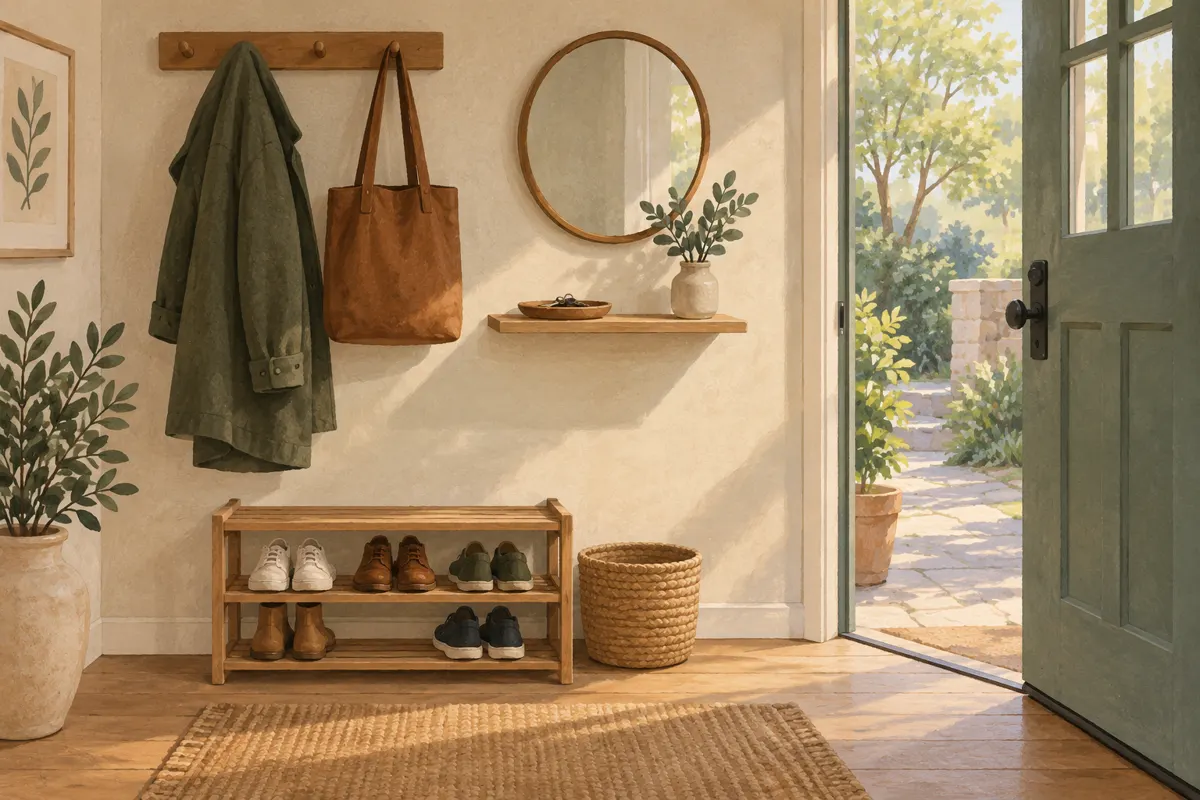
Keep a small entryway organized by giving everyday shoes, bags, coats and keys a specific place near the door, then storing everything else elsewhere. Our proposed setup is simple: wall hooks for hanging items, a narrow shelf with a key tray, and a defined spot for shoes. Add a weekly reset so the space stays useful.
Start with what you actually bring through the door
Before adding storage, gather the items currently scattered around the entrance. Separate things used on ordinary days from occasional gear. An entryway without a closet does not need to hold every jacket, tote bag and pair of shoes you own. Keep less-used belongings in a bedroom closet or another suitable storage area.
- Clear the floor and open the door fully to see which space must stay available.
- Set aside the shoes, coats and bags household members currently use.
- Move off-season clothing, spare bags and occasional shoes to another location.
- Choose a storage spot near the entrance people actually use, including a garage entrance if that is your usual route.
Give coats and bags reachable wall hooks
Wall hooks provide a place for coats and bags when there is no hanging rail. Choose their position with the belongings in hand: a long coat or full backpack takes up more space than an empty hook suggests. Check that hanging items will not interfere with the door or spread into the walking route.
Our proposal is to give each person an identifiable hook or small group of hooks. Put children's hooks where they can reach them, and leave enough separation for bags to hang without covering neighboring hooks. Follow the hardware instructions for mounting and load limits, especially for loaded backpacks.
Treat full hooks as a cue to move something elsewhere. If several coats collect on one hook, return the ones no longer in regular use to bedroom storage. Adding more hooks will not solve the problem if the hanging items already fill the available space.
Use a narrow shelf for keys and small essentials
A shallow shelf can create a landing spot without requiring a console table. Before choosing one, measure the available wall space and consider how far the shelf will project into the entrance. Position it so you can reach it comfortably while keeping the doorway clear.
- One small tray for keys and other pocket items you need when leaving.
- A small basket for sunglasses or frequently used accessories.
- A temporary spot for incoming mail, with papers moved to their next destination during the daily tidy-up.
Keep the arrangement easy to use with one hand. If several people share the shelf, separate baskets can make ownership clear. Avoid filling every inch with decoration; leave room to set down the items the shelf is meant to hold.
Set a clear limit for shoes
Choose shoe storage around the pairs that remain after sorting. A low rack or cubbies can provide defined spaces. A storage bench is another option if there is room and you want somewhere to sit while putting shoes on. Check the footprint with shoes in place, since toes and heels may extend beyond the furniture.
Our proposed rule is to keep only the everyday pairs that fit comfortably in the designated spot. When another pair comes into regular use, move an unused pair elsewhere. Give boots a space that accommodates their height, and choose a surface that is easy to clean when footwear brings in dirt or moisture.
Make the weekly reset part of the system
Storage needs a routine that returns items to their places. Our proposal is a quick daily put-away when you arrive home, followed by a weekly reset at a time you can remember. Use the reset to remove accumulated belongings and notice which parts of the setup are awkward.
- Return extra coats, bags and shoes to their longer-term storage.
- Empty the tray of receipts and items that belong elsewhere.
- Move mail to where you handle paperwork.
- Wipe the shelf and clean beneath the shoe storage.
- Check that the door opens freely and the walking route is clear.
If a bag repeatedly lands on the floor, adjust its hook or location. The best arrangement is one household members can reach and use easily every day.