How to look closely at a painting when you know little about art
· Editorial team lasvegasnewskelly.com
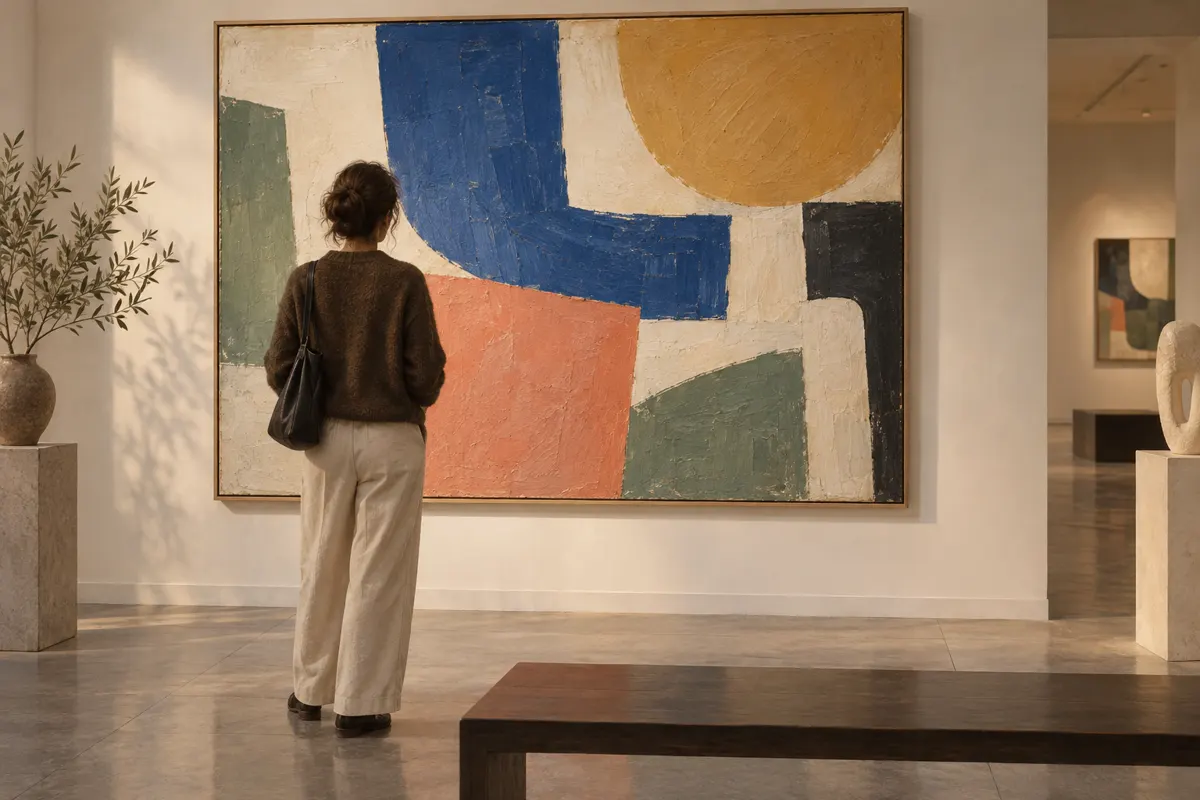
Start by looking at the painting before reading its label. Notice where your eyes land, which colors stand out and one detail you want to examine more closely. You can appreciate a painting without knowing its period, recognizing its artist or liking everything about it. Here is a proposed viewing routine to help you turn an initial impression into specific observations.
Take in the whole painting
Choose a painting that catches your attention, whether through curiosity, pleasure or puzzlement. Stand where you can comfortably see the whole image, respecting any gallery barriers. Give yourself a moment to look before deciding what it means. Your first task is simply to describe what is visible.
- Identify the broad subject: people, a landscape, objects, shapes or something you cannot yet name.
- Notice your first point of attention. It might be a face, a bright patch or a large empty area.
- Let your eyes move across the rest of the image. Find something you missed at first.
- Put your initial impression into ordinary words, such as crowded, quiet, sharp or hazy.
Keep description and interpretation separate for now. “A person is looking away” describes something visible. “The person feels lonely” offers an interpretation. Both can be useful, but the second needs support from details in the painting.
Notice color and light
Pick out two or three colors that occupy large areas, then look for a smaller color that interrupts them. You do not need precise names: dark blue, dusty pink or yellowish white will do. Ask how those colors affect your experience of this particular image, without assuming that each color has a fixed emotional meaning.
- Where are the lightest and darkest areas?
- Do neighboring colors blend gently or meet in strong contrasts?
- Does one small bright area attract more attention than a much larger muted area?
- If there is a recognizable scene, what appears illuminated and what remains in shadow?
Try connecting a reaction to an observation: “The room feels tense to me because the face is brightly lit while the surrounding space is dark.” This gives your response a clear basis while leaving room for another viewer to feel differently.
Follow the arrangement of shapes
Composition means how the parts of a picture are arranged. Return to the place you noticed first and follow your eyes from there. A road, an arm, a diagonal edge or a repeated shape may lead you toward another part of the painting. Notice whether your gaze keeps moving or repeatedly returns to one spot.
Look at the spaces between objects as well as the objects themselves. Is a figure surrounded by open space or squeezed against the edge? Are shapes clustered on one side? Does the scene seem deep, with things extending into the distance, or flat, with forms pressed together?
For an abstract painting, use the same questions without searching for a hidden recognizable subject. Follow boundaries, repeated forms and gaps. You can describe how a large dark shape relates to several small pale ones even when none represents a familiar object.
Choose one detail to examine
Move closer if the gallery allows it, keeping a respectful distance from the work. Select one small area: a sleeve, a leaf, an edge or a patch of paint. Look at how it is made. Are brush marks visible? Does the paint appear smooth or raised? Are outlines crisp or softened?
Distinguish a depicted texture from the paint’s surface. A painted coat might look soft even when the paint appears smooth. Then look at the whole picture again. Does the detail blend into the larger scene, repeat something elsewhere or create a surprising interruption?
Read the label and look again
Now read the title and any accompanying explanation. Use the information to revisit a question you already have. A title might identify the subject; background information might explain an unfamiliar object. Check which parts of the painting support the explanation and which still leave you curious.
Before moving on, try one sentence that combines observation and response: “I keep returning to the small red shape because it stands out against the gray background.” You can also say, “I admire the detailed fabric, although the picture does not appeal to me.” Appreciation can include attention to a choice or technique without personal enjoyment. You do not need to solve every symbol or leave with a final verdict.