How to host a 90-minute board game night for mixed-experience players
· Editorial team lasvegasnewskelly.com
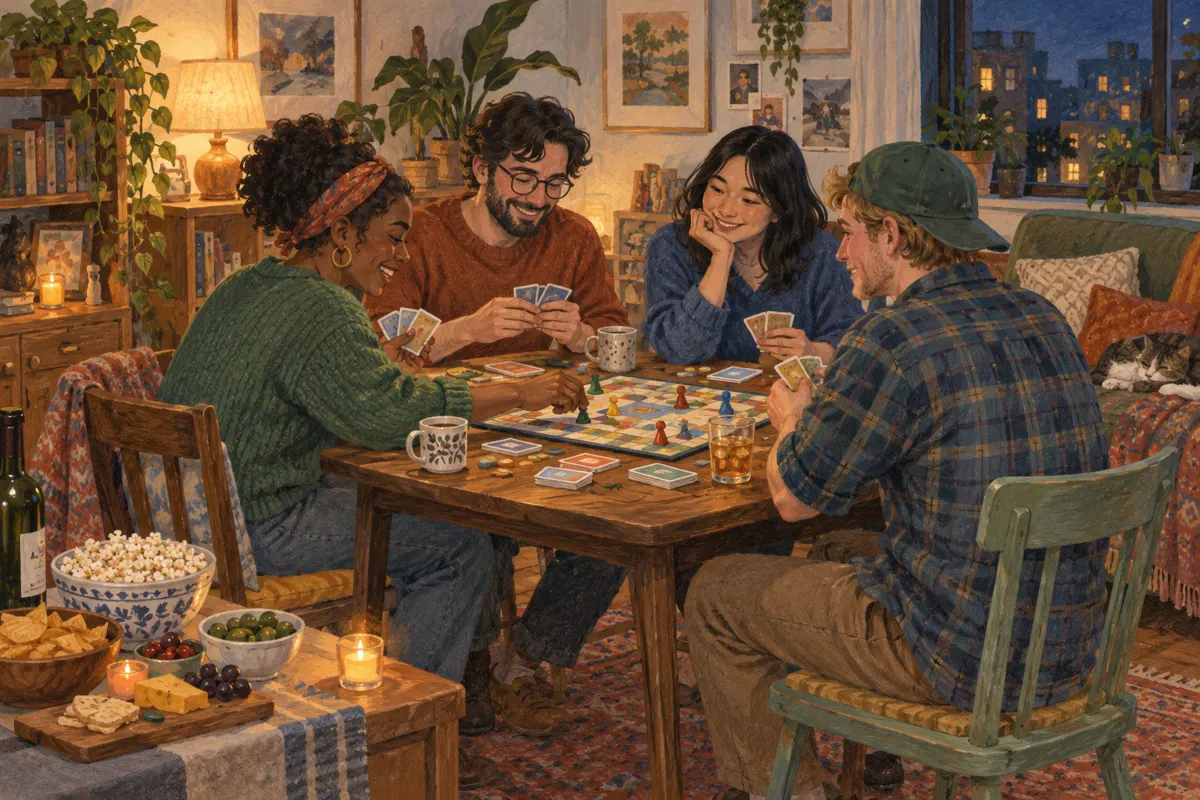
Host a 90-minute board game night by choosing one main game you already know, preparing a short explanation, and keeping a simpler backup ready. Tell guests when the evening starts and ends, confirm the player count, and leave room for questions. For friends gathering before or after evening shifts, a clear finish makes the invitation easier to fit into their day.
Set expectations before guests arrive
Tell guests this is a short, relaxed session with beginners welcome. Ask who can attend the full window and whether anyone must leave for work. Experienced players should know that the evening includes teaching time; newcomers should know they can ask questions without holding everyone up.
A proposed invitation: “Come over from 7:00 to 8:30 for a short board game night. I’ll explain the rules, and we’ll start with something easy. Please let me know whether you’ll arrive on time or need to leave early.” Adjust those hours around your group’s shifts.
Choose games by teaching time and player count
Choose for the confirmed group, rather than bringing out a favorite and hoping it fits. Check the supported player count and the stated duration, then allow extra time for explanation and first-game questions. For this format, our proposed target is a main game you can explain in about five minutes, with enough room to finish comfortably before the closing window.
- Pick a game you know well enough to demonstrate a complete turn.
- Look for a clear goal and a manageable set of choices on each turn.
- Check whether players stay involved throughout, especially if elimination is possible.
- Prepare one easy backup for a changed player count or a tired group.
- Leave expansions and optional rules for another evening.
An experienced guest can still enjoy making decisions within simple rules. Ask about preferences—cooperation, competition, bluffing, or puzzles—without making anyone responsible for choosing from a large stack of boxes.
Give the 90 minutes a simple agenda
The following is a proposed schedule, not a guarantee of game length. Choose games that fit its windows, and keep the final segment flexible.
- Minutes 0–10: Welcome everyone, settle drinks, and play a brief warm-up if time permits.
- Minutes 10–15: Explain the main game and demonstrate one turn.
- Minutes 15–60: Play the main game, answering questions as they arise.
- Minutes 60–65: Take a short break and check the remaining time.
- Minutes 65–85: Replay a familiar short game or use the backup if it fits.
- Minutes 85–90: Finish scoring, pack away, and let guests leave on schedule.
If the main game runs longer, use the replay window as breathing room. Before starting another game, check its likely length against the time left. If your deadline requires stopping an unfinished game, agree beforehand how to handle that; avoid inventing a scoring shortcut at the last minute.
Teach with a short explanation and one example
Learn the rules before hosting and set out the components in advance. Keep the rulebook nearby, but give players a clear starting point before covering unusual situations. Here is a proposed teaching script to adapt to your chosen game:
- State the goal: “We’re trying to…” Explain what winning means.
- Show the essential pieces: “These are yours; this area is shared.”
- Demonstrate a turn: “On your turn, choose one of these actions.”
- Explain the ending: “The game ends when… Then we score…”
- Invite questions: “What would you like me to show again before we start?”
Ask experienced players to let one person lead the explanation. During play, offer help without choosing someone’s move: “Would you like a reminder of your options?” If you discover a missed rule, explain it calmly and agree on a consistent approach for the remaining game.
Make the apartment comfortable for play
Clear enough table space for the game and give everyone a seat with a readable view of the components. Use lighting that makes cards easy to see. Keep music low enough for explanations, and consider nearby neighbors when setting the volume for an evening session.
Put drinks and easy-to-eat snacks within reach, preferably away from the playing area. If friends arrive hungry after work, allow them to eat before handling cards. Watch the group’s energy: use the break to decide whether another round sounds fun. Ending comfortably on time is a successful outcome.